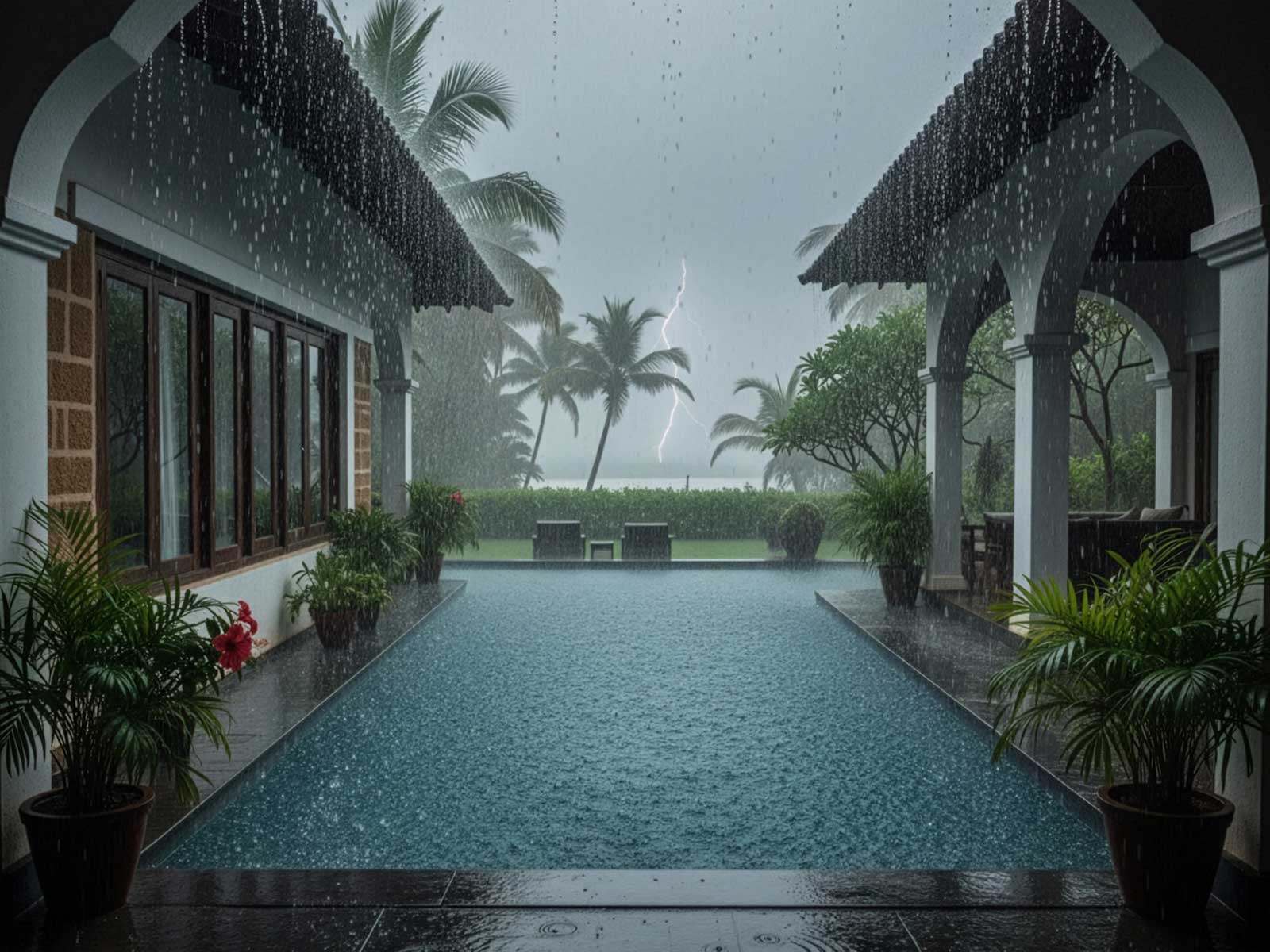
Buying or building a home in Goa is not the same as doing so in Mumbai, Delhi or Bengaluru. Goa’s coastal climate is beautiful but it is also intense. Heavy monsoons, strong coastal winds, humidity, and salt-laden air can quietly damage poorly constructed homes.
If you are planning to buy property in Goa or build your own home, understanding materials is not optional, it is essential.
Here is your ready reckoner to Goa’s weather and how it impacts your home.
1. Understand Goa’s Rainfall First
Annual Rainfall:
Goa receives approximately 2,800 mm to 3,500 mm of rainfall annually, mostly between June and September.
That is significantly higher than most Indian metros.
What This Means for Your Home:
- Continuous exposure to driving rain for 3–4 months
- Water seepage risks in roofs and external walls
- Higher probability of damp patches and fungal growth
- Faster wear and tear of poor-quality paint and plaster
What to Check:
✔ Proper roof slope and drainage
✔ Waterproofing membranes on terraces
✔ High-quality exterior paint with weather resistance
✔ Proper plinth height to prevent ground water seepage
If waterproofing is compromised even slightly, Goa’s monsoon will expose it quickly.
2. Coastal Winds & Salt Air: The Silent Corrosion Factor
Goa’s coastal winds carry moisture and salt particles, especially in properties near beaches or open fields.
The Risks:
- Rusting of mild steel fixtures
- Corrosion of balcony railings
- Damage to external metal frames
- Faster deterioration of exposed hardware
Smart Material Choices:
✔ Use powder-coated aluminium or uPVC windows
✔ Prefer stainless steel (SS 304 or higher) fittings
✔ Ensure anti-corrosion treatment for structural steel
✔ Avoid cheap iron railings without proper coating
Salt air corrosion is slow but relentless. It can significantly shorten the life of external fittings if materials are poorly chosen.
3. Dampness: Goa’s Most Common Home Problem
Humidity levels in Goa often remain between 70%–90%, especially during monsoon.
Dampness is not just about visible water seepage. It is about:
- Moisture trapped in walls
- Poor ventilation
- Capillary action from the ground
- Gaps in windows and doors allowing rain spray inside
Signs of Dampness:
- Peeling paint
- Black mould patches
- Musty smell
- Swollen wooden doors
- Warped cabinets
What to Look For:
✔ Proper damp-proof course (DPC) in foundation
✔ Exterior wall waterproof coating
✔ High-quality plastering
✔ Adequate cross ventilation
✔ Moisture-resistant plywood and laminates
In Goa, poor damp protection can mean constant repainting and repairs every few years.
4. Doors & Windows: Zero-Gap Is Not a Luxury, It’s a Necessity
One of the most overlooked aspects of coastal construction is door and window sealing.
During monsoon, rain does not fall straight down, it often hits sideways due to wind pressure.
Even tiny gaps can result in:
- Water entering through window frames
- Damp flooring near balconies
- Swollen wooden frames
- Fungal growth inside wardrobes
What You Must Ensure:
✔ Precision-fitted window systems
✔ Rubber gaskets for sealing
✔ Proper sill design for water runoff
✔ Multi-lock systems for tighter closure
✔ Balcony doors with raised thresholds
uPVC and high-grade aluminium systems generally perform better in Goa’s climate than untreated wood.
5. Flooring & Internal Materials: Think Long-Term
Goa’s moisture levels impact flooring and furniture more than you may expect.
Avoid:
✘ Low-grade wooden flooring without moisture barrier
✘ Cheap laminates prone to swelling
✘ Iron hardware without coating
Prefer:
✔ Vitrified tiles
✔ Anti-skid outdoor tiles
✔ Engineered wood with moisture resistance
✔ Termite-treated door frames
Remember: once damp sets into flooring or cabinetry, repair is expensive.
6. Roofs & Terraces: The First Line of Defence
In Goa, your roof handles months of heavy rain.
Flat terraces without proper slope or waterproofing often lead to leakage.
Essential Checklist:
✔ Chemical waterproofing layers
✔ Proper rainwater outlets
✔ No stagnation points
✔ Parapet wall sealing
✔ Regular maintenance checks
Even small terrace cracks can turn into major interior damp issues within one monsoon season.
7. Ventilation: Nature Is Your Ally
The solution to humidity is not sealing your home completely — it is controlled ventilation.
Homes in Goa perform best when they:
- Have cross ventilation
- Include large but well-sealed windows
- Allow sunlight penetration
- Avoid fully enclosed damp corners
Natural airflow reduces mould formation and improves indoor air quality.
8. Paint & Exterior Finishes Matter More in Goa
Standard interior paint may not survive Goa’s humidity.
What to Choose:
✔ Anti-fungal exterior paint
✔ Weather-shield coatings
✔ Silicone-based waterproof exterior layers
✔ High-grade primer
Good paint is not cosmetic, it protects structural surfaces.
Quick Ready Reckoner. What to Ask Before Buying a Home in Goa
Before finalising a property, ask:
- What waterproofing system is used?
- Are the windows uPVC or treated aluminium?
- Is there damp-proof course in the foundation?
- What anti-corrosion treatment is used for metal?
- What paint specification has been applied?
- How is terrace drainage handled?
- Are door and window systems sealed with gaskets?
If a developer or seller cannot answer these clearly, proceed cautiously.
Why Material Knowledge Protects Your Investment
Many buyers fall in love with Goa’s views, paddy fields, sea breeze, open skies. But what protects that dream home long-term is not just design, it is construction quality.
Goa’s climate rewards:
- Thoughtful engineering
- Weather-resistant materials
- Precision workmanship
And it punishes shortcuts.
A well-built home in Goa can last decades with minimal maintenance. A poorly built one may demand repairs every monsoon.
